
The Love For A River in Brazil
- Charlotte Sawyer

- Dec 5, 2025
- 4 min read
Updated: Dec 17, 2025
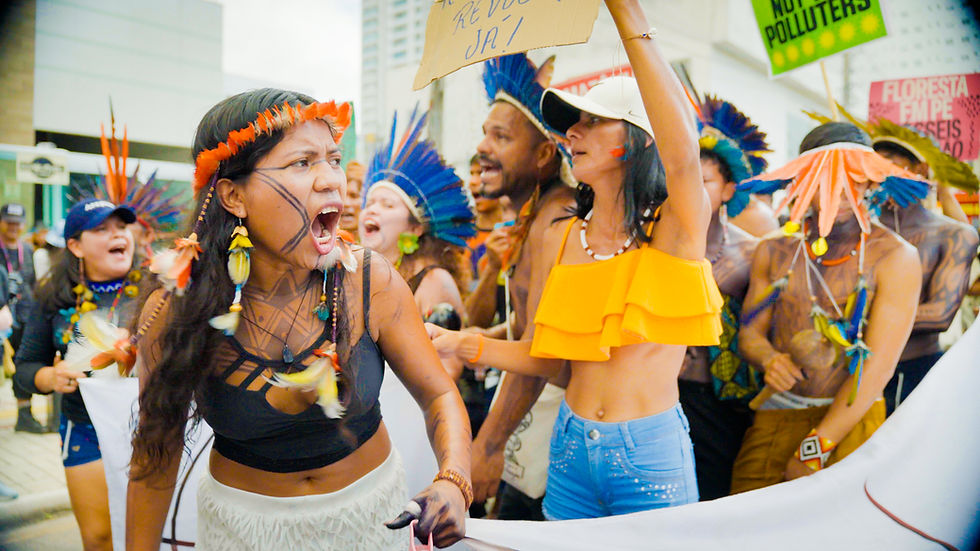
This November I flew into Belém to attend COP30 as part of my research to develop a river film series. The world's attention was on COP30 as decisions were made that would impact our many precious rivers. I hoped to bring a perspective that’s often missing from environmental storytelling. One that captures the love and connection to nature that campaigners are fighting to protect, not just the fight itself.
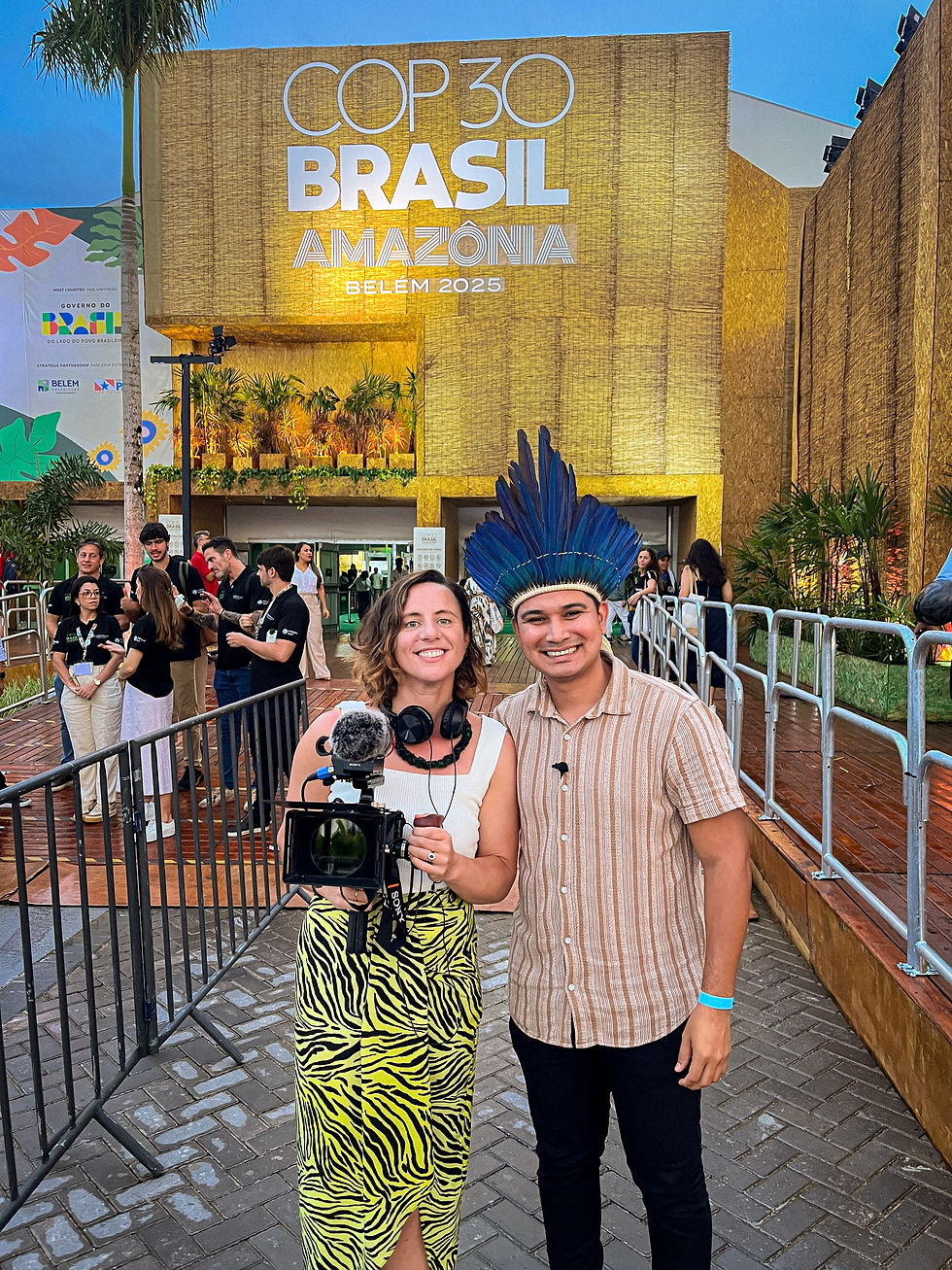
COP30 is the United Nations Climate Change Conference where world leaders and delegates met to negotiate urgent actions to combat global warming. It was prescient that the conference took place in the Amazon region which is under threat. This COP saw the largest Indigenous presence than any before.Indigenous communities stand at the forefront of protecting, stewarding, and advocating for the planet’s ecosystems.
I went to meet and film Indigenous campaigners fighting for their river at COP30. Friends like Igor Marapara (right) who is part of a movement of Indigenous communicators, Mídia Índia. I wanted to understand the many unique ways to connect to a beloved river, and how they’re fighting to protect it.
Also attending COP30 was Priscila Tapajowara who I had met at a film festival Cine En Las Monañas Festival (Cinema in the Mountains) in Colombia. We both screened documentary films about river defenders. Priscilla is an Indigenous filmmaker and photographer from the Amazon biome in the ancestral territory of the Tapajó people in Santarém, Pará.

I filmed Priscilla at the march reporting for Mídia Índia.
“Through Indigenous communication we show, with our own narratives and ways of telling stories, what happens inside our territory, we show our cultural diversity, the richness of Indigenous peoples, and the knowledge we have.
In doing so, we show the importance of the fight to defend the territory, to keep the forest standing and the river alive.”
Priscilla Tapajowara
Many Indigenous campaigners sailed along the Rio Tapajós to COP30 in Belém. It took them three days and one group brought a giant snake to represent the spirit of the Tapajós river. The snake's body held the words
"DIRECT FUNDING FOR THOSE WHO CARE FOR THE FOREST"

Can you see me in the bottom right of this picture filming the march?! Over 70,000 people took to the streets to make it clear that decisions needs to be made to protect the nature that we are part of.

A homemade signs read
‘THE TAPAJÓS EXISTS AND RESISTS.’
Why did these protestors go to such great lengths to demonstrate at this global conference taking place in their home state? It's a matter of urgency.
Only 14 percent of the Indigenous leaders who sought accreditation to the Blue Zone were accepted, according to the Coalition of Indigenous People of Brazil, even as hundreds of fossil-fuel company executives roamed the halls.
Their river, that is a vital part of the Amazon rainforest is under threat. Journalist André Schröder writes
Over the last year Brazil has been fast-tracking plans to turn parts of the Amazon into commercial shipping corridors — moves that would require heavy dredging and greatly expand barge traffic carrying soy and other commodities. For communities along the Tapajós, that means more dredging, louder engines, blasting of rock formations, collapsing fish stocks and threatened turtle nesting sites — and, crucially, projects that often move ahead without proper consultation.
Read Andre's fantastic article to see how activists who live along the Tapajós river engaged in protests, panels and discussions at COP 30.
Alongside meetings, plenaries I filmed blessing ceremonies, photography exhibits, music concerts and a fashion show.
Co-Founder of Mídia Índia Erisvan Guajajara (journialist and model in the fashion show!)
Narrative, media, and communication have a transformative role in driving systemic change and contributing to the healing of the planet, going beyond COP30. Our mission is to amplify Indigenous and local voices, strengthen the visibility of ancestral stories and knowledge, showcasing solutions based on nature and community-based management of territories.
Communication can be a healing tool; we can promote and encourage empathy and connection, humanize stories, showing the impact of climate change on communities and encouraging solidarity actions. Among many other actions conceived collectively, together we are stronger, we are the cure.
From the beginning of the conference, some Indigenous attendees were concerned visibility isn’t the same as true power. At the end that sentiment lingered.
Patricia De Matta writing for Nature4Climate issued a comprehensive summary if you're interested.
COP30 was also defined by the unprecedented presence, leadership, and wins of Indigenous Peoples and local communities. From plenaries to press conferences to protest lines outside the Blue Zone, their voices were unavoidable — and transformative. The renewed $1.8 billion Forest and Land Tenure Pledge, paired with the Intergovernmental Land Tenure Commitment to recognise and strengthen 160 million hectares of Indigenous lands (63 million in Brazil alone), stands among the most meaningful outcomes of Belém.
COP30 in Belém may not have delivered the transformative breakthroughs some had hoped for, but it has moved the needle in crucial areas — adaptation, finance, Indigenous rights, and nature-based solutions. The momentum generated, particularly in private sector engagement and Indigenous-led initiatives, offers hope. The challenge ahead is translating these announcements into tangible action at scale. With COP31 on the horizon, the work begun in the heart of the Amazon could yet become a meaningful pathway toward a 1.5°C future.
Patricia De Matta, Brazilian journalist and Communications Lead for the Nature4Climate Coalition.
I hope to follow the story of this river's protectors and how they continue fighting to protect the Tapajós river.
It was important to me to connect with a river while in the Amazon. The water was warm and fresh and I tried my best not to think about what might be swimming along with me! I toured with friends from Oxfam, a charity I used to worked for in the UK and Iraq.
I also met the largest tree I've ever seen. This Samaúma (Kapok) tree is 300 years old and I couldn't resist a hug. It was magical.

I will be keeping you updated as I hope to develop this series in the future. For now it's back to my cold, muddy and beloved Bristol Avon.


Mình hay xem soi cầu XSMB với soi cầu MB mỗi ngày để kịp cập nhật trước lúc quay, chủ yếu là để có thêm góc nhìn chứ không trông chờ may mắn. Thỉnh thoảng mình cũng lướt qua phần thống kê lô gan, lô xiên và mấy bảng tần suất từ dữ liệu cũ để tự lọc ra vài bộ số thấy hợp lý. Nhiều người trong nhóm còn nói quay thử XSMB hay Rồng Bạch Kim giúp kiểm tra lại cảm giác chọn số, nghe cũng có lý. Mình thấy dự đoán xổ số miền bắc hôm nay nếu biết kết hợp cầu bạch thủ với dàn đề thì đỡ bị chọn bừa hơn. Ai cần chỗ tham…
Mình xem xổ số kiểu giải trí là chính, theo dõi cho vui chứ không đặt nặng chuyện trúng đậm. Trước đây nghe người ta bàn về “cầu” này “cầu” kia, mình cũng tò mò thử tìm hiểu nhưng thấy mơ hồ lắm. Xem lâu dần thì đôi lúc nhận ra vài dạng hay lặp lại nên cũng để ý hơn, nhưng vẫn tự nhắc là chỉ coi như tham khảo. https://soicauxsmb.io/tao-dan-de.html thỉnh thoảng mình ghé qua để có thêm góc nhìn, rồi tự ghi vài ý ngắn và so lại kết quả xem có phải mình đang tự tưởng tượng không. Có bữa trúng nhẹ thì vui, có bữa trật hết thì coi như chuyện thường. Tóm lại mình…